The Trends That Moved While Strategists Were Still Reading Last Year's Reports
2026 is mid-cycle for AI workflow adoption, and the most important shifts have happened quietly inside operating teams rather than in industry headlines. AI workflow trends that matter for strategy aren't the ones generating press. they're the ones changing what's economically feasible. Here are seven that business strategists need to internalize before the next planning cycle.
Each section explains the trend, why it matters, and the adoption path for teams catching up.
1. Agents Are Replacing Workflows, Not Just Automating Them
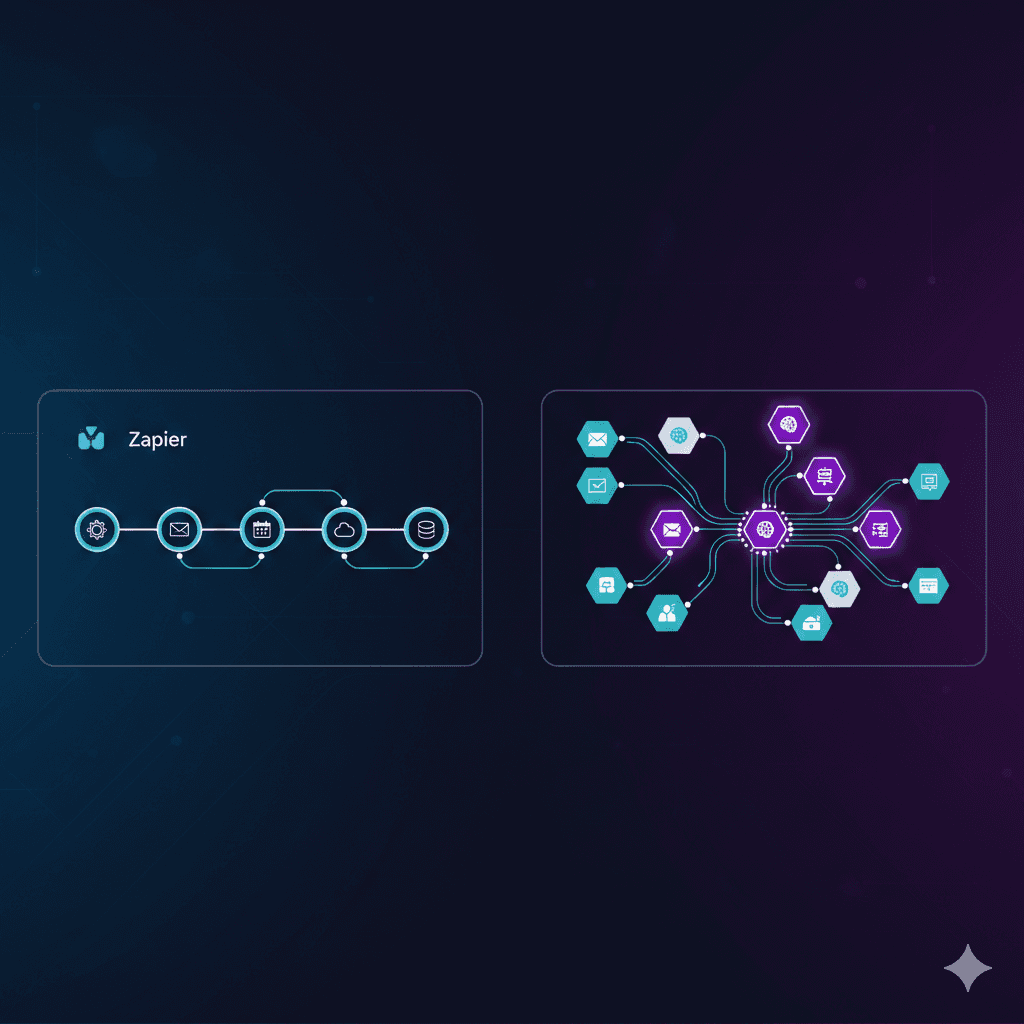
The 2024 model was: build a workflow, automate the steps. The 2026 model is: deploy an agent with goals and tools, let it figure out the steps. The implication for strategy is enormous. workflows that were too messy to automate previously now run reliably.
Adoption path: pick one process you abandoned because it had too many exception cases. Pilot it with an agent-based platform. The results often surprise.
2. Domain Experts Are Building, Not Engineers
The center of gravity for AI workflow building has moved from engineering to operations, sales ops, finance, and HR. The platforms have improved enough that domain expertise matters more than coding skill.
Adoption path: identify three domain experts on the team and give them platform access plus a half-day of training. The pipeline of automation candidates that opens up is larger than any engineering roadmap could service.
3. Knowledge Work Is Being Decomposed Into Tasks Plus Judgment
Forward-looking organizations are mapping every knowledge-work role into the rote tasks (now automatable) and the judgment tasks (still human). The result: roles redesigned around the judgment, with task volume scaled by AI.
Adoption path: pick one role and audit it. Categorize each weekly task as automatable or judgment-bearing. The map produces the team's automation backlog and the role evolution simultaneously.
4. Observability Is Becoming the Differentiator
The first wave of AI workflow adoption proved that the workflows work. The second wave is exposing which platforms let leaders trust them at scale. and the answer is the platforms with the strongest observability. Audit logs, accuracy metrics, drift detection, and per-workflow reporting are now non-negotiable for production.
Adoption path: when evaluating any AI platform, weight observability features as 30% of the decision, not 5%. The platforms that can't prove what they're doing won't survive the second year of deployment.
5. Vertical Workflow Templates Are Eating Horizontal Generalists
Generic AI assistants are losing share to vertical-specific workflow platforms. for property management, healthcare, professional services, e-commerce, and more. The vertical-specific templates ship with the integrations, terminology, and exception patterns that actually fit the work.
Adoption path: ask your platform vendors for templates that fit your industry. If the answer is generic, look at vertical-specific alternatives.
6. Workflows Are Becoming Composable Across Companies
The early 2026 surprise: workflows that span company boundaries. Vendor onboarding, partner integrations, and customer-facing automations now extend across organizations via shared agent protocols. The implication is operating models that simply weren't possible a year ago.
Adoption path: identify two cross-company workflows that today require manual coordination. vendor invoicing or partner enablement are usual candidates. and pilot a workflow spanning both sides.
7. Cost Per Workflow Is Falling Faster Than Headcount Cost
The unit economics of AI workflows are improving by 30-40% annually as models get cheaper and more efficient. Workflows that were marginal in 2024 are now obvious; workflows that don't pencil today will likely pencil in 12 months.
Adoption path: maintain a "next year" backlog of automations that aren't economic today. Revisit it quarterly. Many move from "wait" to "ship now" as costs fall.
What Strategists Should Do This Quarter
The seven AI workflow trends above aren't independent. they reinforce each other. The strategic move:
Reorganize your AI program around domain-expert builders rather than engineering bottlenecks.
Pick one vertical-specific platform with strong observability instead of accumulating point tools.
Map two roles into automatable-versus-judgment work and pilot the redesign.
Identify one cross-company workflow as a strategic differentiator.
Build a quarterly review of the "wait" backlog as model costs evolve.
Companies executing this list tend to compound advantage; companies still treating AI as an IT project tend to fall behind.
The Bottom Line
The trends that matter aren't always the ones in the headlines. The shift from workflows to agents, from engineers to domain experts, and from horizontal to vertical platforms is changing what good operations looks like. and the gap between leaders and laggards is widening every quarter.
Frequently Asked Questions
How fast is this evolving?
Faster than annual planning cycles. Most AI workflow strategy needs quarterly review at minimum to avoid drift.
Are these trends durable or hype?
The seven above are structural. driven by model economics, platform maturity, and operational adoption. They're not going to reverse.
How do we benchmark our maturity?
Count the number of production AI workflows you have, and the percentage built by domain experts versus engineers. Leading mid-market companies have 15+ production workflows by mid-2026, with at least half built outside engineering.
How does Innflow support AI workflow trends adoption?
Innflow is built for the trends above. agent-first authoring, domain-expert builders, vertical templates, deep observability, and the integration coverage that makes cross-company workflows practical for mid-market companies.