In the rapidly evolving landscape of digital transformation, businesses are increasingly relying on technology to drive efficiency and innovation. A critical area of focus is the use of AI agents vs AI orchestration to automate workflows and enhance productivity. As we head into 2026, understanding the differences and strategic advantages of these approaches can be the key to unlocking a 10x ROI for your business. In this post, we will explore the nuances between AI agents and AI orchestration, why they matter, and how to leverage them effectively for maximum business impact.
What is AI Agents vs AI Orchestration?
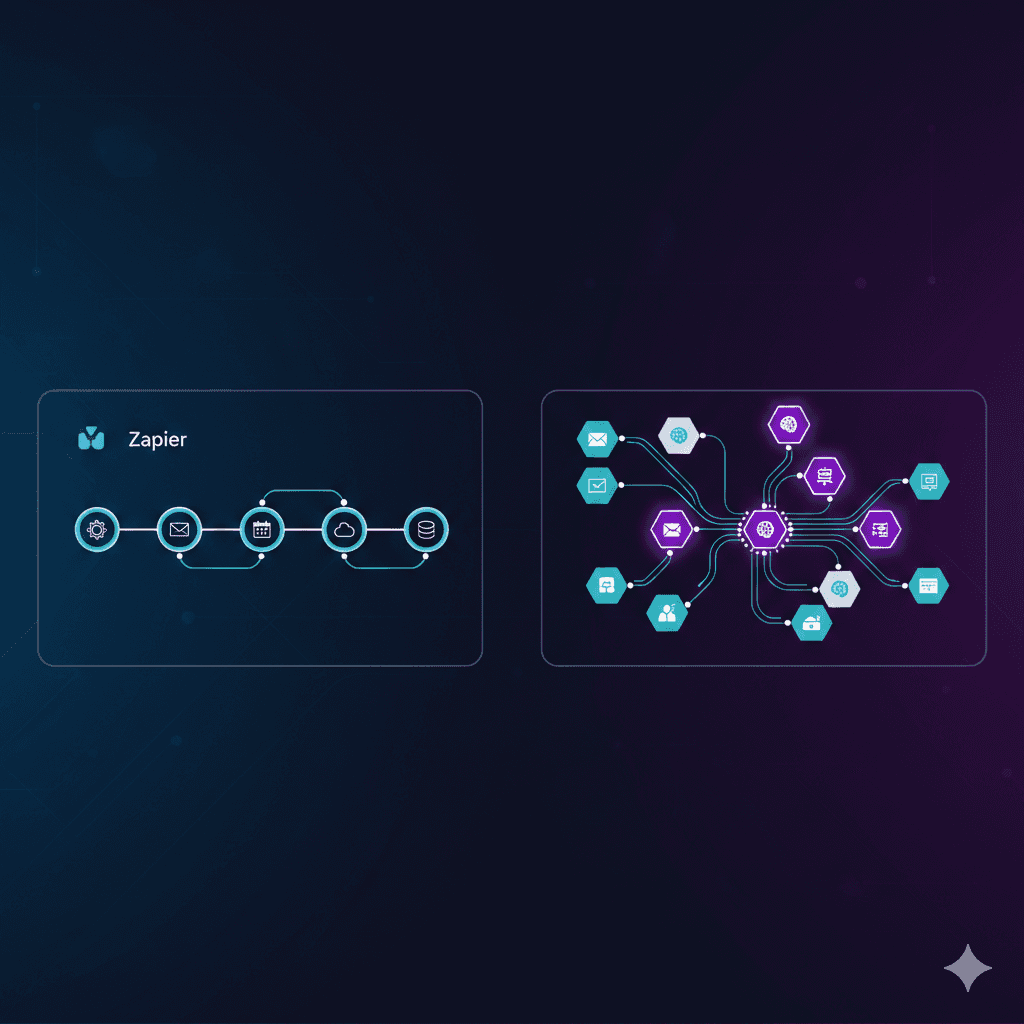
When comparing AI agents vs AI orchestration, it’s important to start with clear definitions. AI agents are autonomous programs that perform tasks and make decisions without human intervention, often using machine learning algorithms to adapt and improve over time. On the other hand, AI orchestration involves the coordination of multiple AI agents to achieve a larger, more complex goal. This strategic alignment of agents can optimize workflows and ensure seamless operations.
In 2026, AI orchestration is becoming increasingly important as businesses strive to integrate AI more comprehensively into their operations. Common misconceptions include the belief that AI agents alone can handle all automation needs, whereas in reality, orchestration is often necessary to manage complex, interconnected processes.
Understanding the Distinct Roles: AI Agents and AI Orchestration
1. The Functionality of AI Agents
AI agents are designed to perform specific tasks. They can be programmed to handle customer queries, process transactions, or analyze data. By automating repetitive tasks, AI agents free up human resources for more strategic activities. For example, a customer service AI agent can handle routine inquiries, allowing human agents to focus on complex issues.
2. The Role of AI Orchestration
AI orchestration goes beyond individual tasks. It involves integrating various AI agents to work together harmoniously. This is particularly useful in scenarios where different departments or systems need to collaborate. For instance, in a supply chain operation, AI orchestration can ensure that production schedules, inventory management, and logistics are aligned.
Practical Applications and Use Cases
1. Enhancing Customer Experience
Businesses are leveraging AI agents to provide personalized customer experiences. Through AI orchestration, companies can integrate customer data across platforms to offer seamless interactions. This not only boosts customer satisfaction but also increases sales.
2. Streamlining Internal Processes
AI orchestration allows for the optimization of internal processes, such as HR functions and financial operations. By coordinating various AI agents, businesses can automate complex workflows, reduce errors, and improve efficiency.
Step-by-Step Guide to Implementing AI Orchestration
To successfully implement AI orchestration, follow these actionable steps:
Identify key processes that can benefit from automation.
Choose the right AI agents for each specific task.
Develop a strategy to integrate these agents for seamless operation.
Test and refine the orchestration process to ensure efficiency and reliability.
Continuously monitor performance and make adjustments as needed.
It's crucial to avoid common pitfalls such as underestimating the complexity of integration or failing to align AI goals with business objectives.
How Innflow Solves the AI Orchestration Challenge
Innflow stands out by providing a robust platform that simplifies the orchestration of AI agents. With intuitive features and seamless integrations, Innflow enables businesses to coordinate their AI initiatives effectively. Unlike competitors, Innflow offers advanced analytics and real-time monitoring, ensuring that your AI orchestration strategy delivers maximum ROI. Ready to see the difference? Try Innflow today for free and transform your business processes.
FAQ
What is the difference between AI agents and AI orchestration?
AI agents perform specific tasks autonomously, while AI orchestration involves coordinating multiple agents to achieve a larger goal.
Why is AI orchestration important?
AI orchestration is crucial for integrating AI into complex business processes, ensuring efficiency and alignment across departments.
How can Innflow help with AI orchestration?
Innflow offers a comprehensive platform for seamless AI orchestration, providing advanced tools for integration and performance monitoring.
Conclusion
As businesses look to maximize efficiency and ROI, understanding the strategic roles of AI agents vs AI orchestration is essential. By leveraging these technologies effectively, companies can streamline operations, enhance customer experiences, and drive innovation. Don't miss out on the opportunity to transform your business—explore Innflow today and start your journey towards smarter, more efficient operations.