The Myths Are Costing You More Than the Tools Would
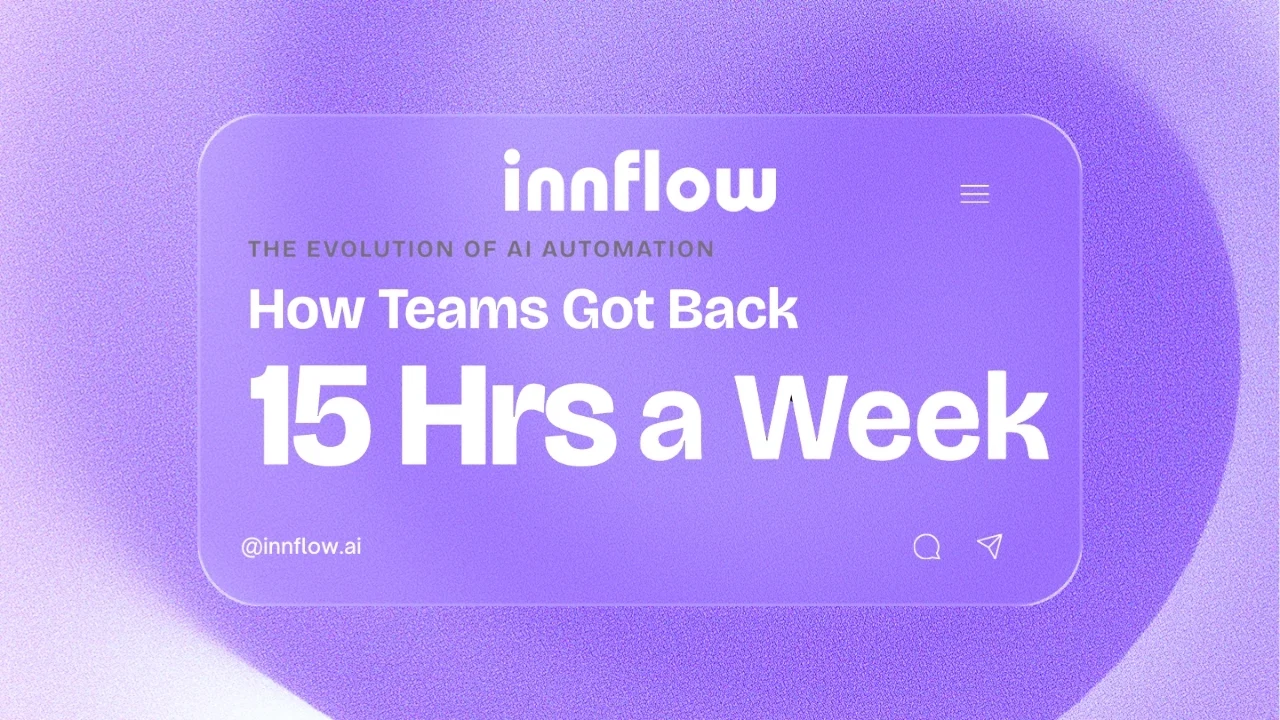
Most teams stalled on AI adoption aren't blocked by technology. they're blocked by inherited beliefs that no longer match the 2026 reality. AI workflow myths shape what teams attempt, what they avoid, and what they measure, and the wrong assumptions quietly cost 15+ hours per week per team in unrealized automation.
Here are the five myths that show up most often, and what's actually true.
Myth 1: "AI Workflows Need an Engineering Team to Build"
This was true in 2022. It hasn't been true since 2024. Modern AI workflow platforms are designed for ops-led builders. a marketing manager or a customer success lead can ship production workflows without writing code.
The cost of believing this myth: teams wait for engineering bandwidth that never arrives, while their backlog of automation candidates grows. The hours saved if engineering owned every workflow would be a fraction of the hours saved by letting domain experts build their own.
Myth 2: "AI Output Is Too Unreliable for Real Work"
This is half-true and dangerous because of it. Raw LLM output is unreliable for anything where precision matters. Properly designed workflows. with retrieval, validation, human-in-the-loop checkpoints, and structured outputs. are very reliable, and have been deployed at scale across customer service, finance ops, and HR for two years now.
The cost of believing this myth: teams refuse to deploy AI in any consequential workflow, missing the 80% of cases where it would work fine with appropriate guardrails.
Myth 3: "We Need a Big AI Strategy Before We Start"
The opposite is true. Teams that start with one concrete workflow learn more in two weeks than teams that spend two quarters defining strategy. The real strategic insight comes from building, not whiteboarding.
The cost of believing this myth: a year of planning while peer teams ship and gather operational data. By the time the strategy is approved, it's based on stale assumptions about what AI can actually do.
Myth 4: "AI Will Replace the Humans Who Do This Work"
The cost of this myth is cultural. teams resist AI adoption because they've heard the replacement narrative. The actual deployment pattern is consistently augmentation: AI handles the rote 70-80%, humans handle the judgment-heavy 20-30%, and net team capacity increases.
The cost of believing this myth: change resistance, undermined adoption, and AI tools that get bought but never used. The teams that frame AI as augmentation see far better adoption. and the savings actually materialize.
Myth 5: "Once a Workflow Works, You're Done"
AI workflows decay. Upstream tools change shape, business rules shift, edge cases accumulate. The teams getting durable value treat workflows like products. with owners, monitoring, and quarterly reviews. The teams treating workflows as set-it-and-forget-it watch them degrade quietly until trust collapses.
The cost of believing this myth: workflows that worked at launch produce wrong outputs six months later, and the team reverts to manual work without telling anyone.
What 15 Hours Per Week Actually Looks Like
For a typical 10-person team, 15 hours per week translates to:
2 hours of status synthesis that an agent could produce automatically
4 hours of inbound triage that an agent could route
3 hours of document search that retrieval could resolve
3 hours of manual data reconciliation an agent could handle
3 hours of exception handling on existing automations
None of this is hypothetical. these workflows are running in production at thousands of mid-market companies right now. The teams not capturing them are paying the myth tax.
The Mindset Shift
Replace each myth with its operational counterpart:
"AI is hard" becomes "AI is a craft skill. start small, learn fast."
"AI is unreliable" becomes "Design the guardrails. then deploy."
"We need a strategy" becomes "Strategy comes from shipped workflows."
"AI replaces people" becomes "AI changes what people work on."
"It's done" becomes "It's a product. own it accordingly."
How to Audit Your Team's Beliefs
Spend an hour with the five people closest to your operational work. Ask each which of the five AI workflow myths they believe. and which workflow they've avoided as a result. The list of avoided workflows is your near-term backlog. Most teams find 8-12 candidates worth tens of hours per week, all blocked by beliefs that aren't true.
Frequently Asked Questions
How do we know an AI workflow is reliable enough to deploy?
Run it shadow-mode for two weeks alongside the existing process. If accuracy is above 95% on the cases you can verify, deploy with human review on the rest.
What if our team won't buy in?
Show, don't tell. Pick one painful workflow, build it, and let the team see the time savings firsthand. Belief follows experience.
Should we build or buy AI workflow capability?
Buy the platform, build the workflows. The platform problem is solved; the workflows are unique to your operation.
How does Innflow help debunk these myths in practice?
Innflow is built so non-engineers can ship reliable AI workflows quickly, with the observability, guardrails, and ongoing monitoring that turn the myths above into actual wins instead of cautionary tales.